
Dare Babalola
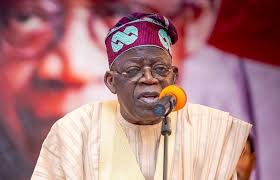
President Bola Tinubu has sent the Appropriation (Repeal and Re-enactment) Bill-2, 2024-2025 to the House of Representatives, requesting approval for a N43.56 trillion budget for the 2024–2025 fiscal year, aiming to streamline the budgeting process and avoid multiple budgets.
The bill, submitted to the House in accordance with constitutional procedures, authorises the withdrawal of N43,561,041,744,507 from the Federation’s Consolidated Revenue Fund for the fiscal year ending December 31, 2025.
Deputy Speaker, Benjamin Kalu, who read the letter during the plenary session, said the allocation comprises N1,742,786,788,150 for statutory transfers, N8,270,960,606,831 for debt servicing, N8,112,685,338,085 for recurrent (non-debt) expenditure, and N22,278,780,968,673 for capital expenditure and development fund contributions.
The Federal Government’s practice of implementing multiple budgets and repeatedly extending the capital component of previous budgets has been a longstanding concern.
The Federal Government, often backed by the National Assembly, has typically justified these extensions as necessary to complete ongoing projects.
Under the current administration, the National Assembly, has approved multiple overlapping budgets for President Bola Tinubu’s government.
For instance, in 2024, Nigeria operated three budgets.
They are the N21.8 trillion 2023 budget, the N2.17 trillion 2023 supplementary budget, and the N28.7 trillion 2024 appropriation.
Though the ninth National Assembly passed the first two during the administration of the late former President Muhammadu Buhari, President Bola Tinubu extended their capital components first to June and later to December 2024, even as the 2024 budget was already in force.
The trend continued in 2025, when the capital component of the 2024 budget, which should have ended in December 2024, was extended twice, first to June 2025 and then to December 2025.
As a result, the country is currently running two budgets simultaneously: the extended 2024 budget and the 2025 budget of about N54.2 trillion, which lawmakers raised by N7 billion from the president’s initial proposal.
But the President in his letter, said the bill is designed to end the practice of running multiple budgets concurrently, which has often complicated fiscal planning and delayed capital project implementation.
He stated that the legislation aims to ensure unprecedentedly high performance rates on the 2024 and 2025 capital budgets.
The President said this signals a shift towards a more capital-intensive spending focus.
Tinubu also explained that the bill provides a transparent and constitutionally grounded framework for consolidating and appropriating critical, time-sensitive expenditures undertaken in response to emergency exigencies.
These include spending related to national security, public welfare, and other urgent needs, ensuring that such expenditures are properly sanctioned while safeguarding fiscal discipline.
Tinubu noted that the bill strengthens accountability and implementation discipline by requiring that appropriated funds are released and applied strictly for the purposes specified in the schedules.
The President added that the bill stipulates that any alteration to approved expenditures (virement) may only occur with prior National Assembly approval.
The proposed legislation, according to Tinubu, also sets conditions for corrigenda to correct genuine errors, mandates separate recording of excess revenue, limits its expenditure to National Assembly approval, and requires periodic reporting on fund releases and agency revenues.
The President urged the House of Representatives to consider the passage of the bill expeditiously.