
Dare Babalola
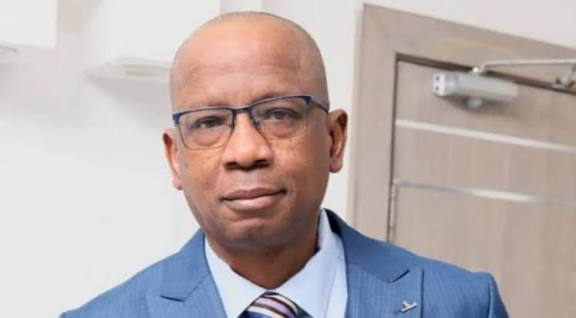
Lagos State Commissioner for Physical Planning and Urban Development, Dr. Oluyinka Olumide, on Wednesday emphasised the need for the state to take control of informal spaces to ensure orderly urban development.
In an article titled, “Why Lagos Must Take Control of Informal Spaces”, Dr. Olumide noted that the increasing pressure on space in Lagos poses serious challenges to the city’s growth.
The commissioner identified informal spaces as road setbacks, walkways, drainage corridors, spaces under bridges, and undeveloped government land that were never intended for permanent commercial or residential use.
He explained that these areas have been occupied for trading, parking, storage, and temporary structures without planning approval, undermining mobility, increasing safety risks, worsening flooding, and weakening the effectiveness of urban infrastructure.
Dr. Olumide emphasised that physical planning exists to balance competing needs within limited space, ensuring safety, functionality, environmental sustainability, and economic growth.
He noted that the Lagos State Government’s renewed focus on administering and regulating informal spaces is a necessary step towards restoring order and protecting public infrastructure.
The commissioner cited the Lagos State Urban and Regional Planning and Development Law, 2019, which assigns the Ministry of Physical Planning and Urban Development the mandate to manage land use, coordinate development, and regulate spatial activities across the state.
He maintained that regulation alone is not enough and that advocacy and stakeholder engagement are crucial to successful intervention.
Dr. Olumide called for sensitisation to help citizens understand that public open areas are shared assets, not private extensions of individual enterprise.
He warned that chaotic land use increases infrastructure maintenance costs and undermines long-term development planning, adding that orderly cities attract investment, tourism, and innovation.
The commissioner stressed that regulating informal spaces does not mean eliminating informal economic activity altogether, but rather recognizing livelihoods while respecting planning standards.
He suggested relocation, redesignation of appropriate areas, phased implementation, and continuous dialogue with affected groups as possible solutions.
Dr. Olumide noted that cities around the world that have successfully managed growth did so by asserting planning authority while maintaining social sensitivity.
He said that Lagos must chart a similar path, combining law, empathy, consultation, and professionalism to ensure the city’s future.
The commissioner stressed that taking control of informal spaces is not just a planning decision, but a statement about the kind of city Lagos aspires to be. He concluded that a city that works must be planned, and a planned city must protect its public spaces.