
Dare Babalola
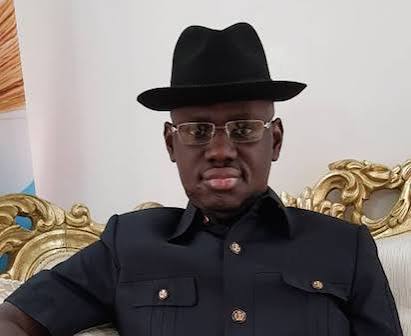
Former Deputy National Publicity Secretary of the All Progressives Congress (APC), Timi Frank, has slammed the conferment of the Grand Commander of the Order of the Niger (GCON) on businessman Gilbert Chagoury, describing it as a “dark moment for Nigeria”.
Frank, in a statement he signed personally on Tuesday, argued that the award by President Bola Tinubu undermines public trust and Nigeria’s anti-corruption stance, given Chagoury’s alleged links to money-laundering cases tied to the late General Sani Abacha regime.
“Today ranks among the saddest days of my life as a Nigerian,” Frank said, recalling reports that a Swiss court convicted Chagoury in 2000 in connection with laundering Abacha loot, after which he allegedly paid a fine of one million Swiss francs and returned about $66 million to the Nigerian government.
“To bestow one of our highest national honours on a person publicly tainted by allegations and judicial findings of corruption sends a deeply troubling message about our national values,” he added.
Frank raised concerns about potential conflicts of interest, citing reports that Chagoury has business ties with President Tinubu and is connected to the Lagos-Calabar Coastal Highway project awarded to Hitech Construction Company, a Chagoury Group subsidiary, without competitive bidding.
“A sitting President should not be in business dealings – directly or indirectly – with close associates while holding office,” Frank said, arguing that the optics of the award and the project fuel public suspicion of abuse of power.
The former APC spokesman highlighted troubling institutional contradictions, noting that Nigeria’s current National Security Adviser, Nuhu Ribadu, previously chaired the Economic and Financial Crimes Commission (EFCC) under former President Olusegun Obasanjo when Chagoury was investigated as one of Abacha’s associates.
Frank, ULMWP Ambassador to East Africa and the Middle East, and Senior Advisor to the Global Friendship City Association (GFCA), USA, claimed Chagoury left Nigeria during investigations, returning later after settling fines and refunding funds.
He also referenced reported issues Chagoury allegedly had with United States authorities over money-laundering allegations, though later settled, arguing that such a history should preclude elevation to national honour and international legitimacy.
Expanding his critique to the international arena, Frank cautioned the United States – particularly President Donald Trump and American policymakers – against being misled by lobbyists or vested interests.
He warned that Washington should not appear to lend moral or political cover to individuals or governments perceived to reward corruption.
“A President reputed for standing against corruption and poor governance should be cautious about associating, directly or indirectly, with a government that glorifies individuals with controversial corruption histories,” Frank said.
He also alluded to persistent claims that Chagoury exerts outsized influence over major infrastructure and commercial decisions in Nigeria, allegedly to the detriment of American business interests and in favour of French-linked firms.
If true, Frank said, such claims raise serious questions about transparency, fair competition and the capture of state policy by private interests.
“Nigeria should not become a theatre where corruption is rewarded, conflicts of interest are ignored, and foreign influence is leveraged against national and allied economic interests,” he warned, adding that the controversy has international governance implications.
Frank criticised what he described as a growing disconnect between government decisions and public sentiment, arguing that transparency and accountability are increasingly sidelined.
He questioned the criteria used to confer the GCON on Chagoury, asking Nigerians to demand clarity on his contributions to national development.
“What hospitals, schools or scholarships has he built or funded to merit this honour?” Frank asked. “Beyond his name being linked for years to alleged corruption cases without clear conclusions, Nigerians deserve to know what qualifies him for this award and who among our business leaders has been similarly honoured.”
Calling for civic vigilance, Frank urged opposition parties and citizens committed to justice and the rule of law to treat the episode as a wake-up call.
He added, “A nation where individuals accused or convicted of corruption are protected, defended or even honoured is a nation drifting dangerously toward institutionalised impunity.
“It is one thing for the rule of law to be weakened; it is far worse for impunity to be openly rewarded.”
Frank urged reflection and decisive action, insisting that Nigeria must recommit to accountability and ethical governance. “Nigeria deserves better,” he said.