
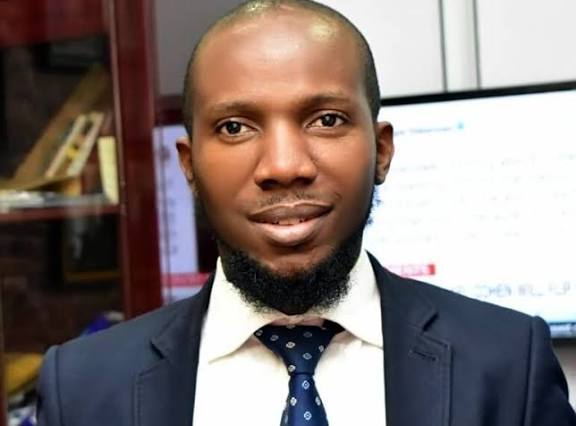
Dare Babalola
Human rights activist and lawyer Inibehe Effiong has raised concerns over the cybercrime charge against former Kaduna State Governor Nasir El-Rufai, who was arraigned for allegedly claiming the National Security Adviser, Mallam Nuhu Ribadu, was wiretapped.
In a statement via his X account on Monday, Effiong pointed out several issues with the charge, including the incorrect reference to the “Department of State Services” (DSS), noting that the National Security Agencies Act only recognises the State Security Service (SSS).
Effiong also questioned the SSS’s authority to prosecute, stating that the Act does not grant the agency prosecutorial power.
He further argued that El-Rufai’s statement on Arise TV, in which he claimed someone told him about the wiretapping, does not constitute an “extrajudicial statement” under the law, as it was not made under caution.
Effiong emphasised that El-Rufai’s right against self-incrimination is protected by the constitution, making it unlikely for him to be compelled to testify against himself.
“No court can compel him to give evidence against himself,” he said.
Effiong concluded that while he is not a supporter of El-Rufai, the charge appears flawed in law, and time will tell.
Recall that the Federal Government, on Monday, dragged the former Kaduna governor before a Federal High Court in Abuja.
Court documents obtained indicate that the charges, marked FHC/CR/99/2026, were filed in the name of the Federal Republic of Nigeria as complainant, with the 65-year-old chieftain of the African Democratic Congress (ADC) listed as the sole defendant.
The charge sheet is dated February 16, 2026.
The prosecution alleged that El-Rufai made self-incriminating remarks in a televised interview on Arise TV on February 13, 2026, as cited in the court documents.
Count One alleges that the former governor admitted to unlawfully intercepting the phone communications of the NSA, an act said to be contrary to and punishable under Section 12(1) of the Cybercrimes (Prohibition, Prevention, etc.) Amendment Act, 2024.
In Count Two, prosecutors allege that El-Rufai acknowledged knowing and relating with individuals who allegedly intercepted the NSA’s communications, but failed to report them to relevant security agencies, an offence cited under Section 27(b) of the same Act.
While count three further accuses El-Rufai and “others still at large” of using technical systems that allegedly compromised public safety and national security by unlawfully intercepting the NSA’s phone communications, contrary to Section 131(2) of the Nigerian Communications Act, 2003.
The charge sheet lists Ernest O.M., Owan O.M., U.M. Bulla, C.S. Eze (PhD), and E.G. Orubor as counsel for the prosecution, acting on behalf of the Department of State Services.