
Dare Babalola
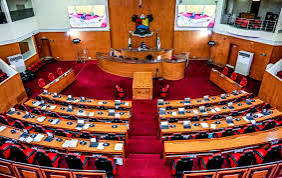
A member of the House of Representatives representing Oshodi-Isolo II Federal Constituency in Lagos State, Okey-Joe Onuakalusi, has come under public criticism following the release of a list of beneficiaries of his constituency empowerment and foreign training programmes.
The lawmaker, elected in 2023 on the platform of the Labour Party in Lagos State, has been accused by critics of favouring individuals of a particular ethnic background over Yoruba constituents in the distribution of training opportunities.
According to details of the programme, about 20 participants were sponsored for training in China in areas including cyber security, artificial intelligence, food processing, tourism development, and environmental data processing. Another group of nine participants were reportedly sent to South Africa for training in nursing and diabetic care.
Out of the 29 beneficiaries listed across both programmes, 24 were reportedly of Igbo origin, while five were Yoruba participants.
The list of foreign training beneficiaries, which circulated online, included individuals sponsored for courses in China and Taiwan in fields such as artificial intelligence, cybersecurity, agriculture, tourism, meteorology, and international business, while the South Africa programme focused on healthcare-related training.
The development has triggered mixed reactions on social media, with some users alleging imbalance in constituency representation and questioning the selection process, while others defended the beneficiaries, arguing that empowerment initiatives are open to all Nigerians regardless of ethnicity.
Reacting to the controversy, the Senior Special Assistant to the Lagos State Governor on Media, Wale Ajetunmobi, described the situation as unacceptable in a post on X, stating that the development amounted to exclusion rather than marginalisation.
He further criticised responses defending the arrangement on the basis of national identity, arguing that such justifications overlooked concerns raised about equitable representation in constituency projects.
Prominent social commentator, Japhet Omojuwa, also weighed in, describing the situation as a reflection of poor sensitivity to constituency expectations and representation.
Other social media users expressed divergent views, with some alleging ethnic bias in the distribution of opportunities, while others maintained that beneficiaries of government-funded programmes are Nigerians first, regardless of origin.
In response to the growing backlash, Onuakalusi took to social media platform X, posting a short message calling for unity and urging an end to tribal sentiments, while maintaining that inclusivity remains central to his representation.
The controversy continues to generate debate online over equity, representation, and the management of constituency empowerment programmes in Nigeria’s diverse political landscape.