Dare Babalola
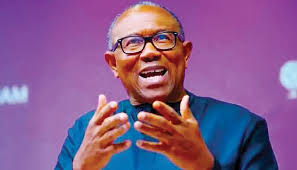
Former presidential candidate of the Labour Party, Peter Obi, has stirred widespread debate after a strongly worded statement in which he criticised some individuals who once championed democracy during Nigeria’s military era.
He accused them, in a statement on Thursday, of betraying the ideals they fought for.
In the statement, Obi referenced Nigeria’s pro-democracy struggle under late Head of State, Sani Abacha, and took aim at figures associated with the National Democratic Coalition.
Describing the situation as both ironic and disappointing, Obi said some of those who once positioned themselves as defenders of democracy and human rights have now become worse than the leaders they opposed.
“Yesterday’s defenders of democracy are today’s destroyers. What a shame,” Obi stated.
The former Anambra State governor argued that history appears to be taking an unexpected turn, with past democratic activists now facing criticism over their conduct in positions of influence.
“What an irony of history, that the acclaimed defenders of democracy and human rights who claimed to have fought for democracy during the era of General Sani Abacha now find themselves worse than the man they opposed,” he said.
In a controversial assertion that has since drawn mixed reactions, Obi suggested that Abacha—long regarded as a symbol of authoritarian rule—may now be viewed differently in comparison to some present-day actors.
“Today, General Sani Abacha, once presumed face of oppression, will be remembered as seemingly more democratic and more respectful of human rights than the so-called champions of activism from the NADECO days. Power indeed reveals character,” he added.
The remarks have generated significant reactions across political and civic spaces.
While some supporters of Obi echoed his concerns about what they describe as democratic backsliding and hypocrisy among former activists, critics have faulted the comparison, arguing that it risks downplaying the human rights record of Abacha’s regime.
Abacha, who ruled Nigeria from 1993 until his death in 1998, remains one of the country’s most controversial leaders, with his administration widely criticised for suppressing dissent and violating civil liberties.
NADECO was at the forefront of resistance against military rule in the 1990s, advocating for the restoration of democracy following the annulment of the June 12, 1993 presidential election.
Meanwhile, President Bola Tinubu was a member of NADECO.