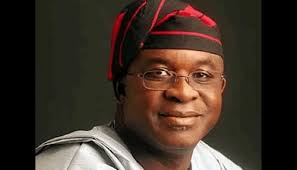
Dare Babalola
The leadership crisis rocking the African Democratic Congress (ADC) has deepened following a controversial decision by the Independent National Electoral Commission (INEC) to withdraw recognition of key figures in the party.
This development has drawn sharp reactions from opposition groups and allies of a former presidential candidate, Peter Obi.
INEC had on Wednesday announced the removal of David Mark and Rauf Aregbesola from its official portal as national chairman and national secretary of the ADC, respectively.
The electoral body said the action was in compliance with a ruling of the Court of Appeal, which ordered all parties involved in the dispute to maintain the status quo pending the determination of the case before a Federal High Court in Abuja.
The commission also declared that it would not recognise Nafiu Bala Gombe, who is pursuing legal action to be affirmed as the party’s national chairman.
Speaking on the development, INEC’s National Commissioner and Chairman of its Information and Voter Education Committee, Mohammed Haruna, explained that the decision was guided strictly by the appellate court’s March 12, 2026 directive.
According to him, the court instructed all parties to preserve the “status quo ante bellum” and avoid steps that could undermine ongoing judicial proceedings.
As part of its response, INEC announced a suspension of all official dealings with the ADC, including the monitoring of party meetings and recognition of any of its activities, until the leadership tussle is conclusively resolved in court.
The decision has, however, triggered strong backlash from opposition actors. The ADC, through its spokesman Bolaji Abdullahi, faulted INEC’s interpretation of the court order, arguing that the “status quo” should reflect the party’s leadership structure prior to the dispute—when Mark was at the helm.
Abdullahi accused the ruling All Progressives Congress (APC) of orchestrating attempts to weaken opposition parties, alleging that INEC’s move was influenced by external political pressure.
“This indicates only one thing—that they are yielding to pressure from enemies of democracy, and we are going to resist it by all legal means possible,” he stated.
The Peoples Democratic Party (PDP) also weighed in, describing the development as a dangerous precedent. Its spokesperson, Ini Ememobong, accused the government of interfering in the internal affairs of opposition parties and eroding democratic norms.
He warned that such actions, if unchecked, could have far-reaching consequences for Nigeria’s democratic stability, characterising the situation as a “national tragedy.”
Similarly, the Obidient Movement, a support base for Obi, condemned INEC’s decision in strong terms. The group’s National Coordinator, Yunusa Tanko, cautioned that the move could spark wider political unrest.
“This is completely unacceptable. Nigeria will face catastrophic consequences if this continues,” Tanko said, alleging bias in the commission’s handling of the crisis.
In contrast, a rival faction within the ADC aligned with Gombe endorsed INEC’s stance, insisting that the commission acted in accordance with the law and the Court of Appeal’s directive.
The faction maintained that the decision underscored INEC’s neutrality and respect for due process amid the party’s internal wrangling.
The ongoing dispute traces back to the formation of a new National Working Committee in 2025 led by Mark—a development contested by Gombe, who claims he should have assumed leadership following the resignation of the party’s former chairman.
With INEC halting recognition of all factions, the ADC remains mired in uncertainty, raising fresh concerns about the stability of opposition politics in Nigeria as the country gradually approaches another election cycle.