Dare Babalola
Renowned Project Management expert, Prof. Godwin Idoro, has called for separate safety regulations for the construction and factory sectors, arguing that the unique nature of each industry requires distinct approaches to occupational health and safety.
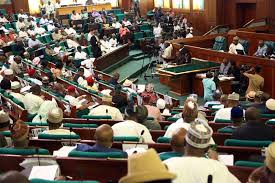
In a statement he signed personally on Tuesday, the expert was reacting to the recent bill which scaled the House of Representatives’ second reading.
Prof Idoro’s call is premised on the understanding that construction sites are inherently different from factory environments, with distinct risks, challenges, and operational dynamics.
He argued that lumping the two industries together under a single safety regulation would be counterproductive and undermine efforts to improve workplace safety.
Idoro’s stance is gaining traction among stakeholders in the construction industry, who are urging lawmakers to reconsider the proposed Occupational Health and Safety Act of 2025.
The bill, currently before the House of Representatives, has been criticised for its perceived failure to account for the unique needs and challenges of the construction sector.
The proposed legislation aims to repeal the Factories Act, Cap F1, Laws of the Federation of Nigeria 2004, and replace it with a new and comprehensive Occupational Health and Safety Act, 2025.
The bill, titled A Bill for an Act to Repeal the Factories Act, Cap F1, LFN, 2004 and to Enact the Occupational Health and Safety Act, 2025 to Provide for a Comprehensive Legal Framework for Occupational Safety, Health and Welfare of Workers in Workplaces; and for Related Matters, was sponsored by the Deputy Speaker of the House, Benjamin Kalu, and co-sponsored by six other lawmakers.
However, the professor argued that the risks associated with construction projects are derived from the nature of the project, the deliverables, the procurement approach, and the resources involved, among other factors. As such, each project requires a unique Health, Safety, and Environment (HSE) Plan and Programmes, which outline strategies for mitigating risks and hazards.
He also noted that safety obligations in construction are shared between clients and contractors, with clients funding safety plans and programmes and contractors implementing them stressing that this shared responsibility underscores the need for tailored safety regulations that account for the industry’s unique dynamics.
Unlike factories, where the focus is on managing accidents and injuries, he emphasised the importance of lead factors of safety, such as safety plans and programmes, in preventing risks and hazards. This proactive approach to safety is critical in an industry where risks and hazards vary significantly from one project to another.
He highlighted six points distinguishing construction sector from factory saying, “Construction is a fragmented industry with very many organised and formal parties and/or bodies inclusive of government agencies that perform distinct and separate duties or functions or services unlike the factory, farm or an office.
“The products of construction are unique therefore, no two projects can be the same or homogenous as obtains in the factory.
“The production and procurement processes are one in construction as against seperated processes in the factory.
“Construction site is an outdoor environment that is susceptible to constant changes: weather, topography, vegetation, water levels, soil characteristics, etc as against a factory or an office that is indoor and a controlled environment.
“The deliverables in construction and the manner in which they are delivered are different from those of the factory with early enclosure being a common phenomenon.
“Construction operations are unique with no two projects having the same features, operations, participants, resources, documents, methods and environments as against the repitive nature of factory operations and products.”
Prof Idoro concluded that, “The explanation above clearly shows that health, safety and environment matters, their regulations and enforcement procedures and structures that are applicable to construction are in every respect different from what are applicable in the factories, farms, mines or offices.
“Just like health, safety and environment matters, their regulations and enforcement procedures and strucutres in the aviation, maritime and health industries are seperated from those of the factories, farms, mines and offices so, should that of construction be seperated. If HSE Plan and Programmes are understood as the treatment of unsafe conditions in construction, so should construction and factory be considered as cancer and malaria and their physicians and treatments seperated.
“The best legacy that the present House of Representatives will leave for Nigeria and the good people of this nation is to separate construction from manufacturing or factory in any proposed bill on Occupational, Health and Safety Regulations and the greatest disservice will be to lump them together.”