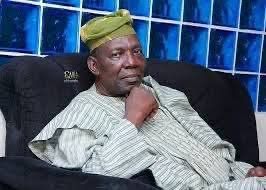
Tunde Odesola
Once upon a time, long before brazenness dissolved into the air inhaled by youths, Àkèré, the son of Onítùre, was a prince in an Ọ̀yọ́ village called Ìkẹyọ̀. In lands far away, Àkèré is called Frog, but within the southwestern region of Nigeria, known as Káàárọ̀ Òjíire, Àkèré is called Àkèré.
Àkèré walked tall, exuding princely confidence. Despite having blue blood coursing in his veins, Àkèré was hard-working, owning massive farmlands, which he tilled and tended.
As it was customary for the young and old of his time, Àkèré went to Balawo Adífáṣẹ to know what pattern fate had woven for him in the womb of tomorrow. He wanted to know his ‘àkọsẹ̀jayé’.
The oracle gave three prophecies. One: Àkèré would be stinkingly rich. Two: He would beget a child. Three: He would become king. Unsure whether the prophecy was meant for him, Àkèré looked around, but he was the only one before the herbalist. Wealth? Child? Kingship? Uhnmm! Expectation and fear palpitated in his chest as he trekked home, the prophecies ringing in his ears.
Hard work is the antidote to hunger. Despite the prediction, Àkèré did not rest on his oars. One day, he went to his farm. As he tilled the land, his hoe struck something hard – kà! “Must be a pebble,” he thought, but his hoe struck it the second time – kà! And the third time – ko! Curious, “What kind of stones are buried in the earth?” Àkèré wondered and dug even more. He couldn’t see the stones yet, but his hoe could feel them – kà, kà, ko, ko.
Àkèré threw his hoe aside and dipped his hands into the loosened earth. He felt a fabric. Quickly, he grabbed his hoe and dug deeper as the fabric came within sight. “A bag of stones?” he pondered. Like a huge tuber of cassava resisting harvest, Àkèré finally pulled the fabric out. Oh, it was a big black bag! He felt it. His heart raced. Frantically, he opened the bag. “Ha, ori iya mi o!” he shouted. Cowries, white like fresh milk, smiled back at him.
Joy quickened his steps as he journeyed home, treasure slung across his shoulder. Halfway home, news came that his wife had put to bed. Wealth and child arriving arm in arm. Àkèré couldn’t contain his joy!
Quickly, he sent an executive order to every palm-wine tapper in Ìkẹyọ̀: save all your wine for me. Another executive order followed, ordering Ìkẹyọ̀ palm-wine tappers to allow anyone to drink bellyful, free of charge. ‘Ẹsẹ̀ gìrì nílé Àńjọ̀fẹ́’ – feet throng Anjọfe’s house for free food. Ìkẹyọ̀ erupted in jubilation. Àkèré had become a celebrity overnight. Ifa does not lie.
However, joy has a slender body that breaks too soon, says Ọla Rotimi in ‘The gods Are Not To Blame’. Thunder struck silently. The king was dead.
Grief enveloped Ìkẹyọ̀, but it did not last. A meeting of kingmakers rose and spoke in one voice. “Àkèré is king-elect.” The village went wild. What more blessings could the gods bestow on a mortal in one day? Drums exploded kolá-kolá. Bells sounded kangẹ̀-kangẹ̀. Wine ran riot inside Àkèré’s head, and he abandoned dancing for leaping. Àkèré leapt wildly for joy, whistling, laughing and leaping higher, wilder, higher, like a fẹ́lẹ̀lẹ̀ rubber ball in a youth-full playground. Àkèré galloped like a happy antelope on lush grassland. Wealth, child and crown in one single day!? Oluwa mi, eyi o wa pọju?
Àkèré pranced and leapt even higher as the drummers and praise singers dipped his name in honey. Joy is not coming. Joy is here! He jumped again and again. And crashed. The drums went dumb. The bells went deaf. Merrymakers lifted the king-elect up, thinking he was merely exhausted. But the elders of the land know better. They know that ‘ẹni ti o subu, lo pari ijo’, the dance ends for the dancer who falls. Àkèré has finished dancing. His thighbones were shattered.
Bad news travels fast. The kingmakers heard about the tragedy, so they met. A cripple cannot be king in Ìkẹyọ̀. Àkèré became the king that never was. On the day destiny smiled brightest, Àkèré forgot that a smooth road is often the slipperiest. He fell into misfortune from the tree of fortune. Afro Juju maestro Sir Shina Peters sings that destiny may be delayed, but it cannot be stopped. I agree partially, but I will add my own thought: “Destiny may be unstoppable, yet it is destroyable.” Some never attained their destinies. Some are destroyed by the destinies.
The myth of Àkèré, as told by Ifa scholar Ifayemi Elebuibon in his book, “Ifa: The Custodian of Destiny,” demonstrates the tempest raging between Afrobeats sensation Wizkid and his online supporters known as Wizkid FC, on the one hand, versus Seun, the son of Afrobeat originator, Fela Anikulapo-Kuti, on the other. ‘Trouble sleep, yanga go wake am’ when Wizkid FC compared their idol with Fela, with Seun describing the comparison as disrespectful. The storm to come shocked Seun, Wizkid and his disciples as egos went to war. Need I say the vacuous brouhaha is as brazen as it is needless, with the three categories of combatants behaving like the mythical Àkèré, all drunk on entitlement.
Life rotates on the wheels of seasons and generations. The youngest adult generation in the global demographic is Gen Z, short for Generation Z. Gen Zers, as they are popularly called, are people born between 1997 and 2012. They are currently between 13 and 28 years old. The average Gen Zer received their first mobile phone between 10 and 13 years old. They make up Wizkid’s online fanatics, called the fanbase.
In the book “Gen Z. Explained: The Art of Living in a Digital Age” (2021), Stanford scholar Roberta Katz et al describe Gen Zers as the first generation never to know the world without the internet. Katz and her colleagues say Gen Z are misunderstood, contrary to stereotypes of being “lazy” or “coddled.” According to them, Gen Z are entrepreneurial and adaptive. Gen Z are typically self-driven, collaborative, and diverse-minded. They value flexibility, authenticity, and a pragmatic approach to addressing problems.
The book argues that much of the negative judgment against Gen Z comes from a misunderstanding of what it is like to grow up in today’s world when compared with how their elders grew up. It explains that older generations criticise them as lazy because they don’t have to do strenuous stuff such as trekking long distances or doing after-school jobs, noting, however, that many Gen Zers earn significant money online doing legit business.
However, for the ever clamorous Gen Z supporters of Wizkid, brazenness is the currency they mistake for boldness. Being ‘self-driven, collaborative, and diverse-minded’ is no license for rudeness. Gen Zers who support the Big Three in the Nigerian hip-hop industry – Wizkid, Davido and Burna Boy, often shout themselves hoarse online like the sheep in George Orwell’s Animal Farm, bleating even when they know their actions are stupid.
At 43, and being a music star cum online content creator, Seun should be wise enough to know that nobody is too big or revered to escape being insulted by Gen Z online warriors sworn to a common cause. Seun is at liberty to defend his father, but I am sure a large percentage of people born in Gen. Y, aka Millennial Generation, to which he belongs, would see a lot of sense in the logic of American writer and humorist, Mark Twain, who said, “Noise proves nothing. Often a hen who has merely laid an egg cackles as if she laid an asteroid,”
The revelation by Seun’s elder brother, Femi, that Wizkid annually plays free of charge during Felabration festivals and the restraint by Wizkid, who initially did not join the fray, was enough reason for Seun to be cautious and not caustic while taking issue with Wizkid’s Gen Z fans, whose eldest member is 28 years old. Seun, when children behave like children, adults should behave like adults.
Seun calls himself Big Bird Kuti. Yes, he is. He is the white chicken that does not behave its age – ẹdìyẹ funfun ti o mọ ara rẹ lagba. Seun behaved like the Àkèré of Ìkẹyọ̀, hyperexcited by unfolding events, running and jumping and galloping online when he should exhibit self-control, and match the fallacy of Wizkid FC with logic or silence. He could have employed the tactic of a former French President and Army General, Charles De Gaulle, who taught his troops that ‘silence is the ultimate weapon of power’. Seun’s call to Wizkid to remove Fela’s tattoo on his hand was a demand far from from commonsense.
Wizkid, like his fan base, also behaved like the Àkèré of Ìkẹyọ̀. Ignoring Seun and his online tantrums would have shown that he was ‘Unavailable’, in synch with Davido’s song. Making himself ‘Unavailable’ would have drawn a demarcation between sense and nonsense. Wizkid calls himself Biggest Bird; I hope he is not the peacock who prides himself as the king of birds, but walks on land. I’d prefer to be the eagle.
By caving in to frustration and telling Seun, “Oya, I big pass your papa, wetin you wan do?” Wizkid brought upon himself rage from a cross-section of Nigerians spanning all generations. The backlash the Wizkid brand suffered during the kerfuffle is a lesson to Gen Y and Gen Z artistes that Olufela Olusegun Oludotun Anikulapo-Kuti still sits on the throne of Afrobeat, more than 28 years after his death.
To fully appreciate the depth of Fela’s musicography in contrast to the noise that largely makes up Nigerian music today, a look into the furnace that forged the Abami Eda is necessary. Fela sang for all seasons. His songs like Water, Na Poi, Lady, Jeun Ki O ku, Shakara, Yellow Fever, Alijonjonkijon, Palaver, Gentleman and Je n Wi Temi, show that music is not only a battleaxe against political oppression, it is also a balm for love, cultural cohesion, social etiquette and enjoyment.
No musician is a saint. Fela was never one. This is evident in his open use of banned narcotic substance marijuana and allegations of high-handedness by some members of this band. Fela never wanted others to copy his style, according to his producer, Odion Iruoje, who said Fela would send thugs after musicians playing his style of music. Likewise, Wizkid, Seun, Davido, Burna Boy, Naira Marley and many other Nigerian artistes have had their ugly shares of notoriety.
But originality, creativity and courage stood Fela out. Fela went to the prestigious Trinity College of Music, London, where he studied music for five years (1958-1963). In London, Fela started out playing Highlife music, recording a song, Won Fe Gba Aya Wa, which was a flop. He came back home and went to work, heeding his mother’s advice to produce music that would connect with the people.
So, Baba Yeni worked his socks off, looking for a breakthrough sound. And eureka, he found it in ‘Jeun Ki O ku’ in 1972! Thus, the broth Fela cooked has become the source of food for Tu Face, Wizkid, Davido, Burna Boy, P Square, Asake, Olamide, Kizz Daniel, Tiwa Savage, Rema, Ayra Starr, Tems, among others.
After Fela got the sound he was looking for, he called it Afrobeat, and took it EMI recording studio, where Iruoje worked. Iruoje said he could not believe his ears when he first listened to Fela’s Afrobeat sound, saying he had never heard anything like that before.
It is instructive to note that Fela called his sound Afrobeat, not Afrobeats. I think he did so because he was the originator and saw himself as the only one who was going to play it, oblivious of the fact that an orange tree with ripe fruits will attract thirsty throats. Fela did not see tomorrow. He never knew he was the river to water a legion of music artists who would add an ‘s’ to his Afrobeat – to show their connectivity to the source, affirm the diversity of music and make the world see the limitlessness of arts.
Popular gospel artiste, Goke Bajowa, whose “Iwo Ko Lo Da Mi” song is an evergreen, has this to say about Fela. “Fela Anikulapo-Kuti was not just an artist, not just a singer; he was many things. Fela was a musicologist – somebody who understands the dynamics, the fundamentals of how sound and music are produced. Fela was a producer, Fela was director and an instructor. In addition to that, he was a multi-instrumentalist who could play the saxophone, trumpets, drums, piano and many other percussions.
“I’m not even talking about his creativity yet, his compositions, oh my God, that’s another level! Don’t forget, he was also a fantastic artist; the showmanship and the singing were out of this world.”
Lamenting the descent in quality music production today, Iruoje said recording companies no longer exist in the country, adding that what obtains today are label operators. Highlighting the difference between recording companies and label operators, Iruoje said, “Recording companies should have the Artiste Department, which talent-hunts artists, audition them, after the audition comes the studio, you get a space large enough, that time we had groups, not solo artistes like we have them now. That time we had groups like Fela, so you need space. The studio should be big enough to contain them, you have the various recording equipment, you have the mixer, the mixer desk, various musical instruments, microphones, and then of course, space big enough for rehearsals and so on.
“But nowadays, it is just label operators, you can have a label and sing into your instrumentation, your company is the label on it, and you put it on the internet, you don’t go to record companies to release your records for you. You don’t find recording studios so popular anymore. And the standard has completely gone down. It was music companies that made up the standards and maintained the standards. Now there are no recording companies; you can put anything in the air, on the internet.”
Fela played music in an era when music was not for everybody. Nowadays, anybody can sing a song in their toilet and send it to a producer who would mix it and put it on their record label. In acting, the difference between theatre performance and cinema production is huge – in terms of skills, spontaneity and connectivity. One is raw, the other is synthetic. The same goes for music production in Fela’s era and now. In sold-out arenas, a Wizkid miming to his songs would send fans into delirium. Fela never mimed to his songs. Fela was live. Good music never dies. Fela forever.
Concluded.