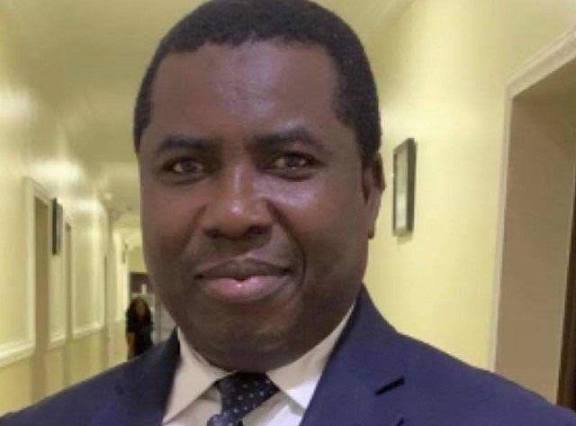
Ezekiel Awojide
Independent National Electoral Commission (INEC) has expressed satisfaction with the performance of its Bimodal Voter Accreditation System (BVAS) during a mock accreditation exercise held across designated polling units in the Federal Capital Territory (FCT) on Saturday.
Speaking during a tour of the polling units in Abuja, the INEC Chairman, Prof. Joash Amupitan, described the BVAS technology as a “game changer”.
Amupitan said that the BVAS technology had been significantly improved to ensure the integrity of the FCT area council elections.
The mock exercise, conducted in 289 selected polling units, was designed to test INEC’s operational preparedness, ahead of the main elections, scheduled for 21 February, 2026.
Amupitan said the essence of the exercise was to test the performance of the BVAS and identify any challenges that might arise in its use before election day.
“We don’t want to use the main election to test. We’d like to use this mock accreditation and mock election to test the functionality of the BVAS itself, as well as the improvements made.
“So far, I am very satisfied that the BVAS has worked excellently. It took just five seconds or less to accredit a voter.
“You can see even at this polling unit, about 11 voters have been accredited, and they have voted.
“We also tried to just get somebody who had voted to come back and see whether the BVAS would allow him, but we all saw that the BVAS popped up immediately that this person had been accredited.
“So with this technology, there is no way you can be accredited twice. There is no way you can vote twice,” Amupitan said.
Addressing concerns regarding voter apathy, the INEC chairman acknowledged it as a persistent challenge, but stated that the mock exercise served as a mobilisation and awareness tool.
“It is part of the responsibilities of INEC to do civic education. But it is not the responsibility of INEC to go and campaign to people; that is for the political parties,” he said.
While urging political parties to be apostles of election awareness, he appealed to FCT residents to come out and “shape their tomorrow” on election day.
Regarding the deployment of materials, Amupitan said that all non-sensitive materials had been batched and deployed.
Responding to questions about potential technical glitches in rural areas, Amupitan assured the public that the BVAS had internal security mechanisms and that presiding officers were being equipped with mobile hotspots as backups to ensure seamless results upload.
On the ongoing debate regarding the electronic transmission of results, he said that INEC was awaiting the final harmonisation of the Electoral Act amendment by the National Assembly.
Amupitan, who also visited Government Secondary School, Garki, Area 10, where training for Supervisory Presiding Officers (SPOs) was ongoing, urged the trainees to study their manual thoroughly and not compromise their duties during the electoral process.
“You are going to be on the field on the election day, and you have a critical role to play. Let us not disappoint the people.
“Take this as a sacrifice and contribution to the development of the nation,“ he said.
Some of the polling units visited in the Abuja Municipal Area Council (AMAC) included PU 018, Area 10/Post Office, City Centre Ward, Garki; PUs 064 and 008, Junior Government Secondary School, Wuse Zone III/GSS Wuse1, Wuse Ward.
Others were PU 003 Sagwari Primary School, Dutse Alhaji, and PU 001 Ushafa I & II/Ushafa Primary School, Ushafa Ward, in Bwari Area Council.
Some of the electoral officers manning the designated PUs noted that BVAS were working optimally.
“It takes an average of five seconds to accredit voters with BVAS,” Umar Abdullahi, of PU 003, Sagwari, told the INEC chairman.
One of the registered voters at the polling unit, Abdul Sule, who was accredited during the exercise, described it as seamless, saying: “We look forward to a stress-free and successful election on Saturday, 21 February.”
The All Progressives Congress (APC) and the African Democratic Congress (ADC) were present at some polling units to observe the exercise.