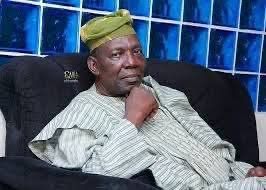
‘Bunmi Ogunade
The name Natasha has consistently echoed in the Nigerian news since early this year – 2025. To some people, the name may have sounded exotic, unfamiliar, or even foreign. Others may have seen it as a name synonymous with controversy, resilience, or bold defiance against intimidation in Nigeria’s highest legislative chamber.
However, findings revealed that Natasha has a Russian/Latin origin, meaning ”born on Christmas day”, while other sources linked it to a Muslim name meaning ”strong” or “Allah’s gift”. Whichever, the concern here is not about its meaning, but its impactful character.
As for me, Natasha is not a name I had first encountered from the chambers of Nigeria’s Senate. My earliest contact with it dates back to when I was around nine years old in the ancient city of Ibadan. Then, I was just a young school boy fumbling to read English after first mastering my mother tongue – Yoruba. That was actually the norm in all homes at that period.
One afternoon, while wandering through my father’s modest collection of novels stacked upon an old acacia-wood table, I came across a book titled Forgive Me, Natasha by Sergei Kourdakov. That table, besides being a make-shift shelf for books, was also the carrier of our colonial days’ Radio with a Record-Changer which both engines were later lost to “Yoye Radionics” who worked on the ground floor of our rented storey building at Dapo Layode Street in Oke-Ado. Among all the things on that table, it was Forgive Me, Natasha that left the deepest impression on me.
ILLUSTRATION IN SERGEI’S NATASHA
Forgive Me, Natasha is a non-fictional account, written by Sergei Kourdakov, a former teenage leader of a squad of the Russian KGB police during the Soviet era. His task, and that of his squad, was to grievously hunt down Christians who dared to profess their faith, to disrupt their secret gatherings, arrest, torture, and intimidate them.
In one of their raids, Sergei encountered Natasha who was a fragile, yet courageous Christian girl. She was mercilessly beaten, yet her spirit remained undaunted. Despite the pain and humiliation inflicted on her, Natasha refused to deny her faith. She was resolute, fearless, and unwavering in her conviction.
This defiance, rather than weakening her, only strengthened her resoluteness. In her frailty, she became a symbol of unyielding faith in the face of tyranny and oppression by the Communist government.
Years later, Sergei himself stumbled upon the very faith he had persistently persecuted. He encountered Christ, and his conscience began to convict him. Memories of Natasha haunted him. He recalled her bruises, her courage, her refusal to bow and her return with piercing force to what she was persecuted for. All efforts to find Natasha to beg her for forgiveness and to tell her that the very faith for which she was beaten had also been accepted by him proved futile. She was nowhere to be found!
Sergei’s life ended abruptly and mysteriously around age 21 as he attempted to flee to Canada from a Russian ship. His sorrow and plea for forgiveness, looked unanswered.
The title of his memoir Forgive Me, Natasha has thus become not just a personal confession, but a moral allegory. It sets a reminder that cruelty will eventually bow before truth, and that forgiveness sought too late is dangerous.
NIGERIA’S NATASHA:
Fast forward to Nigeria in 2025, the name Natasha once again made bold headlines. This time, in the person of Senator Natasha Akpoti Uduaghan, representing Kogi Central Senatorial District of Nigeria.
In the saga with the revered President of the Senate, there were allegations of harassment and counter-allegations of gross misconduct, heralding a six-month suspension of the female senator. The various scenes emanating from the drama have since turned to a seasoned film.
While Natasha’s office was sealed, she refused to be silenced or crumbled, just like her namesake in Sergei’s true-life account. Instead, her resilience highlighted the fragility of Nigeria’s democracy, where intimidation often triumphs over justice, and where women in politics continue to face uphill battles in the hands of some male counterparts.
At this juncture, I need to state here that I do not intend to dwell on the conflict between Akpoti and the Senate President, for obvious reasons. Rather, I wish to draw out the moral echoes that both Natashas in Soviet Russia and in contemporary Nigeria respectively represent. The duo represent the courage of maintaining one’s position in the face of oppressive systems and the cost borne especially by women who refuse to bow to intimidation, just as chronicled by Sergei.
The following are some of the didactic keynotes of Sergei’s story for the nation Nigeria:
- POLITICAL INTIMIDATION AND ‘GODFATHERISM’:
Nigeria’s political culture has, for decades, thrived on ‘godfatherism’ and systemic silencing. Power is rarely about competence or service; rather, it rests with those who have the backing of the so-called “powers that be.” Those who resist this order or attempt to carve an independent path are often victimized, suspended, impeached, or tactically silenced.
This picture exactly mirrors the suffering of Natasha in Sergei’s novel. She was persecuted simply for refusing to conform and for daring to profess her convictions in a very hostile environment.
ii. GENDER VICTIMISATION IN POLITICS:
Just as the Natasha of Soviet Russia suffered because she was perceived as “a weak vessel” under the oppressive Communist government, Nigerian women in politics often find themselves doubly marginalized as opponents of entrenched political structures, and also as women in a perceived patriarchal system.
Since Independence in 1960, Nigeria has yet to produce an elected female Vice-President, let alone a Head of State. The female gender was only opportune to emerge Speaker of the National Assembly for a period of four months in 2007. State Governorship has also remained an exclusive preserve of men, while only six Deputy Governors, representing 16% are currently in office. The trend has remained the same across all other political offices.
Even when women rise, they are often subjected to ridicule, intimidation, or outright suppression. This is sometimes more because of their gender than their political stance. The Natasha’s story, in all its versions, is a testimony of this situation.
iii. ETHNIC AND RELIGIOUS PERSECUTION:
One of the major themes of Forgive Me, Natasha also finds grim resonance in Nigeria’s ongoing struggles with religious and ethnic persecution. In Borno, Kaduna, Plateau, Benue, Kogi, Kwara, Ondo, Oyo, Ogun, Rivers, Bayelsa Delta, Anambra and many other states, minority groups face violence, kidnappings, displacements and outright decimation. Communities are destroyed, farms are burnt, and families are shattered, all because they belong to the opposite faith, another ethnicity, or wrong political parties.
It is said that where two elephants fight, the grass suffers. Women and children, mostly bear the brunt of this suffering. They are displaced, raped, widowed, orphaned, or kidnapped. Their cries, like Natasha’s in Sergei’s book, are often drowned by the noise of political games and power struggles.
iv. WIDENING GAPS BETWEEN THE POLITICAL ELITE AND THE WORKING CLASS:
Since the Socialist cum Communist era when Forgive Me, Natasha was set, whenever the gap between the rich political elite and the working class masses becomes too wide, tension is bound to rise and the polity tends to become polarised. Globally, the situation has remained unchanged till date.
While the recent wage increase by the incumbent government in Nigeria is commendable, the rate at which inflation, embezzlement, corruption and other economic vices intervene as cancerous variables is worrisome. The working class barely have little to take home at the end of the month and ultimately, a paltry sum at retirement. In contrast, a majority of the political elite have excess with which they live ostentatious lifestyles.
CONCLUSION:
The enduring lesson of Forgive Me, Natasha is simple, but profound. It preaches that cruelty may dominate for a season, but truth will endure at last. Oppression may silence voices for a while, but it cannot kill conviction. Unfortunately for Sergei, he learnt this truth too late, but Nigeria as a nation still has time to learn.
If the nation is to heal from its cycles of ‘godfatherism’, gender injustice, ethnic-religious persecution and widening gaps between the political class and the working class, then we must turn the plea of Sergei’s “Forgive me, Natasha” into a national confession:
Forgive me— for those silenced voices.
Forgive me— for those broken bodies of women and chchildren.
Forgive me— for the unfulfilled promises of democracy.
Forgive me— for the politics of intimidation that crushes the courageous.
Forgive me – for amassing the wealth of the nation at the expense of the working class masses.
But, more than forgiveness, we need to seek redemption by building a society where true justice thrives; where political power is not the preserve of a few godfathers; where women stand equally in governance; where the youths are given a voice; where religion and ethnicity no longer determine who lives or dies; where the religious fathers will speak the truth and not enrich themselves from the offerings of the poor congregation and lastly, where forgiveness is not a last-minute cry of regret, but a living principle in our national life.
Forgive Me, Natasha is more than the borrowed title of a book I read as a child, decades ago. It is a plea for justice, equity, and mercy in Nigeria. It is a reminder that our nation’s redemption depends on whether we will continue to persecute our “Natashas,” or whether we will finally hear their voices and embrace the truth they carry.
May God bless Nigeria!
Ogunade, a communication expert and public affairs commentator, writes from Lagos