
Dare Babalola
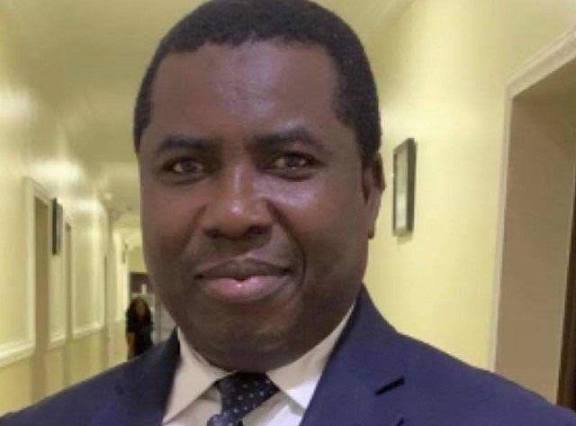
A Christian group has cautioned against moves to remove Independent National Electoral Commission (INEC) chairman Josiah Amupitan, arguing it could undermine Nigeria’s democracy.
The group, Christian Social Movement of Nigeria, warned against threats of an election boycott along religious lines.
The group responded to the Supreme Council for Shari’ah in Nigeria, which had demanded Amupitan’s resignation, threatening Muslims would not recognise elections under his watch.
Sheikh Bashir Umar, President of the Supreme Council for Shari’ah in Nigeria, made the statement at the Council’s 2026 Annual Pre-Ramadan Lecture in Abuja.
His statement was, however, countered by the Christian Social Movement, which in a statement signed by Governing Council Chairman Sunday Oibe and CEO Bosun Emmanuel, insisted the INEC chairman’s appointment is a presidential prerogative, backed by the constitution.
The group urged religious bodies to tread carefully with public statements, warning against fusing Nigeria’s fragile politics and security, and stressed that appointments to national institutions like INEC should follow constitutional guidelines, not religious whims.
“Appointments into national institutions must be guided by the Constitution and due process, not by religious sentiment, lobbying or threats,” the CSMN said.
Drawing historical parallels, the group recalled that ex-President Goodluck Jonathan, a Christian, appointed Prof. Attahiru Jega, a Muslim, as INEC chairman without religious backlash, while former President Muhammadu Buhari, a Muslim, appointed Prof. Mahmood Yakubu, also a Muslim, without threats of election boycott.
According to the CSMN, the objections to Amupitan’s appointment under President Bola Tinubu raise questions about whether the resistance is rooted more in identity than merit.
“The present objections to Prof. Amupitan’s appointment raise serious questions as to whether the resistance is driven by identity rather than merit,” it said.
The group explained that the controversy surrounding Amupitan stemmed from a legal opinion he expressed as a private legal practitioner regarding reports of killings of Christians in parts of Nigeria, stressing that such an opinion should not be weaponised to question his neutrality.
“The matter for which Prof. Amupitan is being labelled a threat to democracy is rather trivial. That citizen gave a legal opinion in his capacity as a legal practitioner,” the statement said.
Beyond the immediate controversy, the CSMN called for a broader national conversation on constitutional reform, particularly concerning the status of Shari’ah within Nigeria’s legal framework.
“While Shari’ah personal law is constitutionally recognised, Shari’ah criminal law lacks clear constitutional backing and has contributed to tensions in parts of the country,” the group stated.
Quoting legal authorities, including Prof. Ben Nwabueze, Justice Mohammed Bello and Mr. Solomon Asemota (SAN), the group maintained that aspects of Shari’ah criminal law are inconsistent with provisions of the 1999 Constitution, especially regarding freedom of religion.
The group urged religious leaders to channel their influence toward constructive engagement and constitutional reform, rather than pursuing actions capable of deepening sectarian divisions.
“Attempts to deepen religious imbalance when the country should be seeking healing and fairness will only drag it deeper into mutual suspicion and sectarian violence,” the statement added.