Dare Babalola
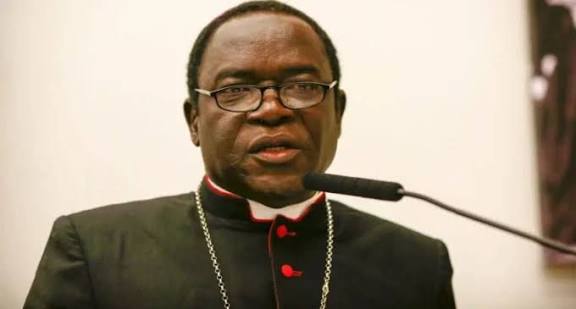
The Catholic Bishop of Sokoto Diocese, Matthew Hassan Kukah, has appealed to the international community not to re-designate Nigeria as a “Country of Particular Concern” over alleged religious persecution, warning that such a move could undermine ongoing efforts to foster peace and interfaith dialogue.
Speaking at the launch of the Aid to the Church in Need (ACIN) 2025 World Report on Religious Freedom in the World on Tuesday, Kukah acknowledged Nigeria’s deep-seated challenges, including terrorism, insecurity, and ethnic tensions, but insisted that the situation cannot be simply categorised as targeted persecution of Christians.
Kukah emphasised that Nigerians are dying unacceptable deaths across the country, not only because of their religion but also their ethnicity.
The cleric urged foreign powers, particularly the United States, to support Nigeria’s internal peace initiatives instead of imposing punitive measures that could undermine dialogue between Christian and Muslim communities.
Kukah stressed, “Acts of impunity still persist, but it is my view that redesignating Nigeria a Country of Concern will hurt the initiatives we are working on with the current government.
“Designating my country, Nigeria, a Country of Concern will only make our work in the area of dialogue among religious leaders in our country and elsewhere with the Nigerian state even harder.
“It will only increase tensions, sow doubt, open windows of suspicion and fear and simply allow the criminals and perpetrators of violence to exploit.
“What Nigeria needs now is vigilance by organisations such as ACIN and civil society groups to continue to press for change. We should be supported and encouraged in this effort, not punished.”
He noted that the administration of President Bola Tinubu had made conscious efforts to rebuild trust through strategic appointments and inclusive gestures.
He added, “The President and the Vice President are Muslims, yet Christians have not felt alienated,” he said, noting that “the Chief of General Staff of the Nigerian Army, the Director of State Security Services, among others, are Christians,” and that “the President just appointed a Christian as the leader of the ruling party.”
Kukah, however, contrasted this with the Muhammadu Buhari administration, accusing it of exacerbating religious divisions and inadvertently empowering extremist ideologies through its policies and appointments.
“The last eight years of the Buhari administration marked the worst phase in the history of interfaith relations in Nigeria, especially relating to violence against Christians and their exclusion from power.
“That administration gave oxygen to jihadists by virtue of its policies, which overtly favoured Islam and northern Nigeria.
“The President himself was a Muslim, ensured that the Senate President, the Speaker, the Deputy Speaker, the entire leadership of security was entrusted to the hands of only Muslims, almost all from the north.
“I argued then that in reality, the difference between President Buhari and the jihadists was that he was using a pen while the jihadists were using weapons of violence against Christians,” Kukah said
Bishop Kukah’s comments are part of an ongoing discussion about Nigeria’s potential redesignation as a “Country of Particular Concern” by the U.S. State Department due to religious freedom concerns.
Nigeria was initially designated in 2020 under President Donald Trump but was removed from the list in 2021 by President Joe Biden, sparking debate among religious groups.