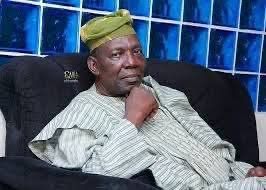
Everest Amaefule
I hated the sight of blood as I hated swallowing medicine. That’s one of the reasons I didn’t become a doctor despite my love for the title. As a child and a teenager, seeing an injured person or a person in pain was enough to provoke tears in me. If I didn’t cry openly, I would hide to do it. Therefore, after I attended a career counselling session and did some introspection, I realised it was vain nursing the idea of being a medical doctor.
If I so much hated the sight of blood, that also means I couldn’t have wanted to be a soldier. It didn’t even cross my mind that I could be one. How could a person who hated the sight of blood ever contemplate carrying a gun? Guns are not for decoration. They are meant to spill blood if the occasion demands it. I am probably a pacifist.
Perhaps that was before. Watching the recent Kwara church attack has prompted me to ask some basic questions. What if there had been a man in a hidden position in or around the church with superior firepower on the day of the attack? Could the invaders have escaped that church alive? Then, the question turned personal. What if I had been the one in a position to shoot those invaders? Would I have had a qualm eliminating them? No, not at all, the answer came swiftly. Even if I wouldn’t shoot to save myself in the face of danger, it would be a moral sin to watch the gory of gunmen invade a house, a sanctuary for that matter, and do nothing if I had a gun.
It would be wrong for a shepherd to go into hiding while his flock is slaughtered. It is the heartless shepherd, a hireling, or the one without a shield or an arrow, who would fold their arms and watch an intruder invade and waste their flock. Even an unarmed shepherd might be forced to say, ‘if I perish, I perish’.
King David once thought he was an ordinary shepherd until a lion invaded his flock and took a lamb. That was when the lion in him also woke up. He went after the lion, rescued the lamb, and slew the lion.
Another time, a bear decided to try his luck but also ended up waking up the bear in David. Both the lion and the bear woke up the beasts in David and paid dearly for it.
It is disheartening to watch our dear nation descending into the Hobbesian state of nature where life is ‘solitary, poor, nasty, brutish, and short’. Hobbes had argued that it was to avoid the fear and conflict that resulted from such a state that rational individuals and institutions surrender their natural rights to a sovereign in exchange for security, peace, and order.
In modern times, the state is the sovereign in contrast to the remote past when individuals and royal families acted as absolute sovereigns.
In the past few weeks, individuals and government officials have been arguing about the sovereignty of Nigeria, positing that it should be inviolable by the President of the United States of America, Donald Trump, who had threatened to help the Nigerian state wake up to its responsibilities.
However, what these arguments ignore is the fact that the integrity of a sovereignty is not in the multitude of words but in its demonstration of power and might. If people have surrendered their glory and their might to you and you show that you can’t exercise it on their behalf, then they look for whatever they think is a viable alternative.
When a sovereignty is a subject of debate, the likelihood is that it has already been compromised or tampered with. For many years, Islamist terrorists have been questioning the sovereignty of the Nigerian state. Because the state could not answer them in the manner of sovereigns, other groups, including killer herdsmen, bandits, criminal gangs, and unknown gunmen, had joined them at some points to query the sovereignty of the Nigerian state. Some had gone to the extent of carving out territories where they exercise sovereignty and seek to expand their influence from there. In a manner that shows the state’s acquiescence to some of these groups, it had sent emissaries to them and even opened negotiations with them.
In answer to those calling for the arrest of one of the emissaries, Sheikh Gumi didn’t mince words, “I had approval for the things I did.”
When criminal groups are testing the might of a state, the state must speak like a sovereign. It must also act as a sovereign – to show that it has the legal monopoly of violence and the capacity to stop every other contender to that right. This is how to be respected by other sovereigns.
However, to ensure we don’t dwell on the theoretical while the majority of the people bear the indiscretion of the wicked and the criminal, as well as the weakness of the state, it has become expedient to rethink the nation’s security architecture. Perhaps one of the areas we should be looking at is adopting a collective and community approach to the security challenges bedevilling the nation. This will involve training members of the community and religious organisations in marksmanship. It will also involve licensing snipers among worshippers and community people who would always be alert in case their skills are called to test before the arrival of security operatives. Interlacing worship centres and communities with marksmen and snipers will send the signal to bandits and their cohorts that the game has changed. Should they persist in their folly and wickedness, they would learn the hard way that lives in Nigeria are no longer poor and cheap.
These are unusual times calling for unusual thinking and action. When pacifists are ready to bear instruments of violence, the state should know that the water level has reached the throat. At such a time, it is evil to sit on the fence and play ‘siddon look’. After all, the work of righteousness and even the work of development is done in peace.
—–Everest Amaefule, PhD, is the author of the book Technology & Development: An African Perspective