Dare Babalola
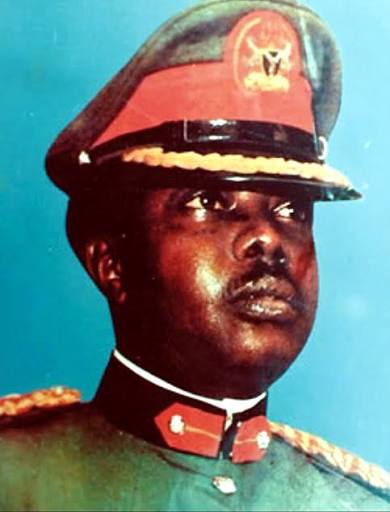
Aisha Muhammed, daughter of late Head of State General Murtala Ramat Muhammed, has attributed her father’s assassination to his unassuming lifestyle and leadership style, saying it made him vulnerable to attack.
Aisha, Chief Executive Officer of the Murtala Muhammed Foundation, made the remarks during an appearance on ARISE News on Monday.
Reflecting on her father’s legacy 50 years after his assassination, Aisha said the late Nigerian leader’s embodiment of values like accountability, responsibility, and discipline remains a significant part of his enduring impact.
She noted that her father viewed corruption as a cankerworm that could destroy society, and he backed his words with actions, demonstrating his anti-corruption stance through his personal and leadership conduct.
“I think his (late Muhammed’s) leadership style was clear. He led with clarity. He believed in accountability.
“He believed in responsibility, you know, and then, you know, we’re all very familiar with his anti-corruption stance, you know, and corruption was not something you sort of just talked about.
“He actually literally felt that it was a cankerworm that was going to destroy our society, and 50 years later, look at what has happened.
“But I also think that he felt that you had to embody the leadership, you know, in the way you yourself presented yourself,” Aisha said.
According to her, Murtala Muhammed deliberately avoided the trappings of power, including heavy security details, motorcades and sirens, insisting on living like the ordinary Nigerian.
This lifestyle, she said, directly contributed to his assassination on February 13, 1976.
Aisha noted that he was travelling in traffic like every other road user when the attack occurred.
“If you know, my father didn’t go around with motorcades and sirens and a lot of security. Now, there are people who say to me, 50 years later, it must have been quite painful because of the loss, but that was what he embodied.
“So, and that was why it was actually easy to assassinate him, because he didn’t have a whole slew of security with him.
“He was in traffic just like everybody else. In fact, the traffic wardens stopped them, and they stopped, just like everybody else, and that was when the coup plotters came out from behind the sectarian barricade, and then he was shot,” she said.
General Muhammed seized power in a bloodless coup in July 1975, ousting General Yakubu Gowon.
He was, however, assassinated during an abortive coup on February 13, 1976, barely six months after assuming office as Nigeria’s Head of State.
During his brief 200-day tenure, Muhammed implemented sweeping reforms, including the dismissal of over 10,000 public officials accused of corruption, the creation of seven new states, and plans for a transition to civilian rule.
His administration also initiated the process that led to the relocation of Nigeria’s capital from Lagos to Abuja.