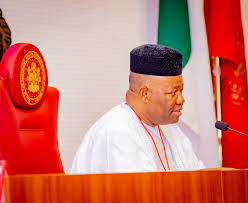
Dr. ‘Gbola ADESINA
The core arguments revolve around underfunding, curriculum relevance, teacher quality, the academic-technical divide, and the urgent need to embrace entrepreneurship and technology for the future of work.
The essay provides a sharp critique of the educational system in many African nations, highlighting critical areas that require urgent attention to align with global development standards and the demands of the 21st-century economy.
The core issues raised in the 2019 essay are still highly relevant today (October 2025), but the scale of the challenges and the continental response have been updated by recent developments, particularly the push for the Fourth Industrial Revolution (4IR) and the African Union’s renewed focus on education.
The insightful critique of African education, penned in 2019, remains acutely relevant today. As we mark another World Teachers’ Day, the continent stands at a critical juncture: celebrating marginal progress while facing a monumental task of transforming education to match the demographic bulge and the demands of the 21st century.
Here is a full update and rearrangement of the essay, framed for World Teachers’ Day, 2025 Celebrations.
THE DEEPENING CRISIS OF FUNDING AND TEACHER SHORTAGE
The original essay correctly identified a crisis of financial commitment and teacher supply. Five years on, these challenges are even more pronounced, despite some positive trends in enrollment.
(1) The Persistent Funding Deficit
The UN Model recommends that developing nations allocate 26% of their budgetary allocation or 5% of GDP to education.
The Global Reality
Many African nations continue to fall severely short of these benchmarks. For example, Nigeria’s 2025 budget proposal allocated only around 7.3% of the total budget to education, a figure that remains far below the UNESCO recommendation of 15−20% of the national budget.
A Tragic Legacy
The historical under-spending of Nigeria, allocating a mere 0.8% of its GDP for a prolonged period, has created structural deficiencies that are now magnified by population growth.
The Cost of Inaction
The World Bank’s 2024 Africa’s Pulse report estimates that Sub-Saharan Africa requires an additional 11 million new teachers and 9 million new classrooms to achieve universal education by 2030. Sub-Saharan Africa still invests less in education per capita than the rest of the world.
(2) The Teacher Supply Catastrophe
The global teacher crisis has escalated beyond the 2019 projection of needing 12 million teachers by 2020.
Updated Global Shortage
UNESCO now estimates the world needs over 44 million new primary and secondary educators by 2030.
Africa’s Burden
The shortage is most acute in Sub-Saharan Africa, which alone accounts for an estimated 15 million teachers needed to ensure every child has a qualified educator.
Retention Crisis
Teacher attrition rates have nearly doubled in some regions since 2015, driven by low pay, poor working conditions, and burnout. The initial mandate of Colleges of Education to produce qualified teachers is critically undermined by a lack of investment in both their capacity and the retention of their graduates, particularly for the foundation of primary education schools.
THE STRUCTURAL FLAW: CURRICULUM AND THE TECHNICAL-ACADEMIC DICHOTOMY
The essay’s critique of the inherited 6-3-3-4 system and the neglect of technical training is validated by the current need for a skills-based revolution.
The Lost Pillars
The marginalization of specialized institutions, the “Where are our Technical Colleges, Teacher Training Colleges, and Modern Schools?” query directly explains the modern skills gap.
The Polytechnic-University Dichotomy
The continued politicization and devaluing of Polytechnics over Universities persists. This is an anachronism. Polytechnics must be fully empowered to produce the technical manpower for national development, while Universities must prioritize academics, specialized research, and human capital development with clear pathways into professional practice.
The Paper Chase
The “multitudes go for University education, looking for paper qualification, not for skill acquisition” observation is a direct result of this structural flaw. African systems must shift to producing job creators equipped with relevant skills, not just job seekers with degrees.
THE MANDATE FOR THE FUTURE: 4IR, STEM, AND ENTREPRENEURSHIP
Since 2019, the need for curriculum reform has moved from a recommendation to an existential necessity, accelerated by the global COVID-19 pandemic.
The African Union’s Response: A Decade of Action
The African continent is demonstrating a collective awareness of the urgent need for transformation:
AU Year of Education 2024
The African Union designated 2024 as the “Year of Education,” signaling a continent-wide prioritization.
The AU Decade of Education (2025-2034)
Launched in October 2025, this initiative rests on five transformative pillars, directly addressing the concerns of the 2019 essay:
Foundational learning for literacy and numeracy.
Teacher professionalism.
Skills for employability and entrepreneurship.
Digital learning and innovation.
Robust governance and financing. The goal is to reposition Africa from a “knowledge consumer to knowledge producer.”
Embracing the Fourth Industrial Revolution (4IR)
The call to review the “old curriculum which has relegated us to the background” is more critical than ever, with a focus on:
Digital Skills for All
By 2030, an estimated 230 million jobs in Africa will require digital skills. The COVID-19 pandemic forced a rapid, albeit unequal, acceleration of digital learning (Virtual Education), proving that technology integration is possible.
STEM Education
Advancing Science, Technology, Engineering, and Mathematics (STEM) education is explicitly cited in the AU’s strategy to harness the 4IR. The greatest skill gaps are in Engineering and ICT the key fields for economic transformation.
The 4IR Ingredients
The curriculum must integrate the core components of 4IR: AI, Robotic Technology, Blockchain, IoT, Machine Learning, and 3D Printing. The future of work is irrevocably defined by these technologies, meaning millions need to switch occupations and upgrade their skills.
(3) The Entrepreneurial Mindset
The vision of a graduate who can create jobs is central to future stability.
Entrepreneurship is Critical
As Prof. Yemi Osinbajo noted, “Entrepreneurship Education develops the creative and critical thinking essential for success in Industry 4.0. It is the language of the 21st-century economy.”
Relevance for Youth
It remains an aberration and self-injustice for young people to study courses already saturated. Employers seek novelty and skills that can solve current and future economic problems.
CONCLUSION
The challenge remains the same: ensuring that what is coming out of our schools is what the economy requires graduates fit for the purpose. Despite a decade of progress in access, African education is still falling short on quality, equity, and relevance.
The launch of the AU Decade of Education (2025-2034) provides a continental roadmap. The commitment now must shift from strategic frameworks to tangible impact on the ground, backed by the political will to provide the necessary funding and support for the teachers who are the ultimate agents of this profound transformation
Dr. ‘Gbola ADESINA
Ibadan, @ 11.55am
05-10-2025