Dare Babalola
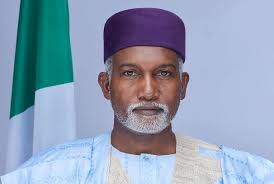
Foreign Minister Yusuf Tuggar has dismissed allegations of Christian genocide in Nigeria, circulating in some Western media, as serious distortions of the country’s situation.
The minister expressed concern over the claims, warning that they pose a significant threat to the country’s international reputation and global image.
The minister said this at the Reuters NEXT Gulf Summit in Abu Dhabi.
“One of our major challenges at the moment is the false narratives that are being created about Nigeria, this issue of religious persecution, Christians are being persecuted, which couldn’t be further from the truth,” the minister noted, according to a report by Reuters on Wednesday.
He added that potential “investors need to come and see for themselves.”
The minister’s remarks follow a wave of online claims and comments from some US politicians, alleging the Nigerian government is permitting or backing attacks on Christians, accusations officials have consistently denied.
Nigeria is a religiously and ethnically diverse nation with over 200 ethnic groups and a near-even split between Muslims and Christians. Both religions are practised openly.
Despite the image of religious harmony, Nigeria has seen outbreaks of violence driven by a range of factors — ethnic disputes, economic competition, land conflicts, and insurgency. These are sometimes mischaracterised as purely religious in nature.
The Islamist militant group Boko Haram has waged a deadly insurgency in northeastern Nigeria for over 15 years, killing tens of thousands.
Beyond addressing security and religious concerns, Tuggar also spoke on economic resilience and reform efforts.
According to Reuters, the minister noted that Nigeria is relatively unaffected by the 15 per cent tariffs imposed by United States President Donald Trump on Nigerian goods, including oil and gas.
CNBC Africa reported that Tuggar said Nigeria had certain advantages that would help it to withstand the blow.
He added that the country has strong relationships with other trading partners such as China, India, and Brazil.
“We are a very large country of 230 million people, so we have a huge internal market,” he said. “That also means we have a larger talent pool than other countries.”
“And we can of course trade with other countries, which is what the Tinubu administration is trying to emphasise – strategic autonomy.
“Our relationships are not based on ideological considerations; they’re based on interests, beginning with our national interest. So we trade with the U.S., China, Brazil, and India.
“And our focus is not necessarily on one axis or another, especially in a multi-polar world,” the minister noted as reported by CNBC Africa on Wednesday.
He also cited domestic reforms aimed at boosting investor confidence, including exchange rate stabilisation, improved access to foreign exchange, tax incentives, and structural reforms in the power sector.
Tuggar also criticised the approach of some developed nations to Africa, warning against viewing the continent merely as a source of extractable natural resources.
“Sometimes it’s like the game Minecraft: There’s oil, there’s gas, there’s critical minerals, rare earths. We put a bit of this, we invest in this. No, that’s not the way it goes.
“The engagement should be based on mutual respect, based on shared interests and based on the fact that Africa needs to develop. If it doesn’t develop, we continue to deal with irregular migration, with all these other challenges,” he noted.