Dare Babalola
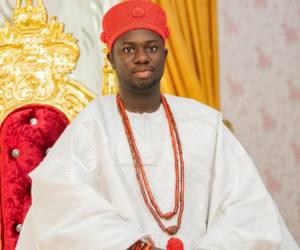
The Oloyede of Okeluse in Ondo State, Oba Oloyede Adekoya, has weighed in on the controversy surrounding reported protests in South Africa’s Eastern Cape over the crowning of an Igbo monarch, declaring that the institution of kingship cannot be transplanted outside its ancestral and territorial roots.
In a Facebook post shared on Tuesday, the monarch—widely regarded as the youngest traditional ruler in Ondo State—expressed concern over the tensions sparked by the development and used the opportunity to reiterate the sacred and territorial nature of traditional authority.
“I have taken note of the protests in the Eastern Cape of South Africa concerning the crowning of an Igbo king, and the tensions that have followed,” the monarch stated, setting the tone for a strongly worded intervention on the matter.
Oba Adekoya emphasised that kingship is deeply tied to ancestry, history, and land, stressing that no throne exists in abstraction. According to him, a king derives legitimacy not merely from installation rites but from an inherited connection to a people and their heritage.
“A king is not merely installed; he is enthroned over a land that is bound to his ancestry, his forefathers, and the history of his people,” he wrote. “Such a land is not abstract. It is inherited, sometimes won, sometimes gifted, but always rooted in a people with shared origin, values, and traditions.”
The traditional ruler argued that the idea of crowning a monarch outside his ancestral homeland runs contrary to the very essence of traditional institutions, warning that such practices could erode their sanctity and provoke unnecessary conflict.
“For this reason, the concept of crowning a king in another man’s land is fundamentally flawed,” he declared. “The institution of kingship carries weight, responsibility, and sovereignty within a defined cultural and territorial space. It is not a title to be replicated outside its natural jurisdiction.”
Addressing Nigerians and other Africans in the diaspora, Oba Adekoya acknowledged their right to organize for communal welfare and cultural preservation but drew a clear distinction between such associations and traditional rulership.
“Our people in the diaspora have every right to organize themselves into unions and associations that protect their welfare and promote their heritage,” he said. “These bodies may be led by presidents, chairmen, or executives who attend to the needs of their people. That is proper and commendable.”
However, he cautioned against elevating diaspora leadership structures into kingship, arguing that doing so undermines the institution and risks igniting disputes within host communities.
“The elevation of such structures into kingship diminishes the sanctity of the traditional institution and creates avoidable conflict,” he added.
The monarch further underscored the enduring nature of cultural identity, insisting that migration does not alter an individual’s traditional allegiance.
“The word ‘king’ is not light. It is sacred,” he stressed. “Every Nigerian, regardless of where life takes them, traces their origin to a particular town, village, and kingdom. The king of that land remains their king. That identity does not change with migration, nor can it be recreated elsewhere.”
The statement comes amid growing debate over the role and limits of traditional authority in diaspora communities, particularly in multicultural societies where questions of sovereignty, identity, and cultural expression often intersect. Oba Adekoya’s intervention adds a prominent traditional voice to the discourse, reinforcing the position that kingship remains inseparable from land, lineage, and indigenous legitimacy.