Dare Babalola
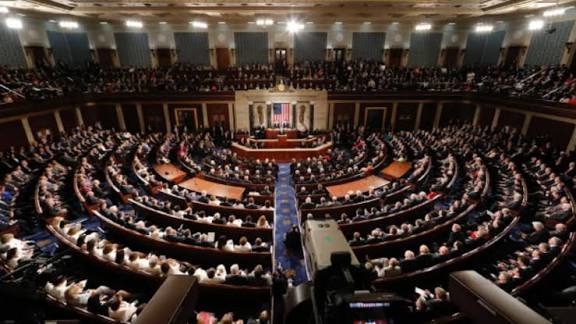
The United States House Appropriations Committee has sounded the alarm over Nigeria, stating that the country is fast becoming “one of the most dangerous places on Earth to follow Christ,” citing a sharp decline in safety for Christians.
The Committee voiced these concerns in a Saturday night statement on X (formerly Twitter), signaling renewed pressure on the White House to address what US lawmakers are increasingly calling an emerging Christian genocide in Nigeria.
In its post, the Committee stated, “Nigeria is rapidly becoming one of the most dangerous places on Earth to follow Christ, and as Robert Aderholt made clear in a roundtable this past week, we can’t ignore this crisis.
“Appropriators will continue to defend liberty and uphold religious freedom across the globe.”
Rep. Robert Aderholt, a senior House member and key voice on religious freedom, echoed the concerns, urging Washington to take stronger action against the ongoing violence targeting Christian communities in Nigeria and beyond.
“We must stand firmly with Nigeria’s Christian communities and all persecuted believers worldwide, and I commend our collaborative efforts to provide the President with the information needed to confront this growing tragedy,” Aderholt said.
Nigeria has faced increasing international scrutiny over rampant violence linked to banditry, terrorism, and communal clashes, with Christian communities in the Middle Belt and northern states bearing a disproportionate impact.
Attacks by extremist groups such as Boko Haram and Islamic State West Africa Province (ISWAP) have persisted for over a decade, while banditry, armed herder–farmer clashes and mass kidnappings have increasingly targeted rural Christian settlements.
The U.S. has repeatedly accused Nigerian authorities of failing to adequately protect vulnerable communities, with some lawmakers going as far as describing the situation as “religious cleansing.”
Although the Nigerian government has consistently rejected allegations of genocide, arguing that the violence is driven by criminality and not religious persecution, Western legislative bodies continue to raise concerns about patterns of targeted attacks.
The U.S. State Department had previously listed Nigeria as a “Country of Particular Concern” (CPC) for religious freedom violations in 2020, only to remove it a year later, a decision that drew sharp criticism from American legislators, including Rep. Aderholt.
For months, several congressional committees have held hearings and roundtable discussions, which led to the President Donald Trump administration reinstating Nigeria on the CPC list and threats of stronger measures, including possible military actions against terrorists in Nigeria.
With the latest statement, the House Appropriations Committee signals that the issue may now influence budgetary and foreign policy decisions in Washington.
The Committee also hinted at continued efforts to pressure the White House into taking a more assertive stance.
For many advocacy groups monitoring religious violence worldwide, the Committee’s declaration marks yet another sign that Nigeria’s security crisis, long treated as an internal issue, is fast becoming a focal point of international legislative concern.