
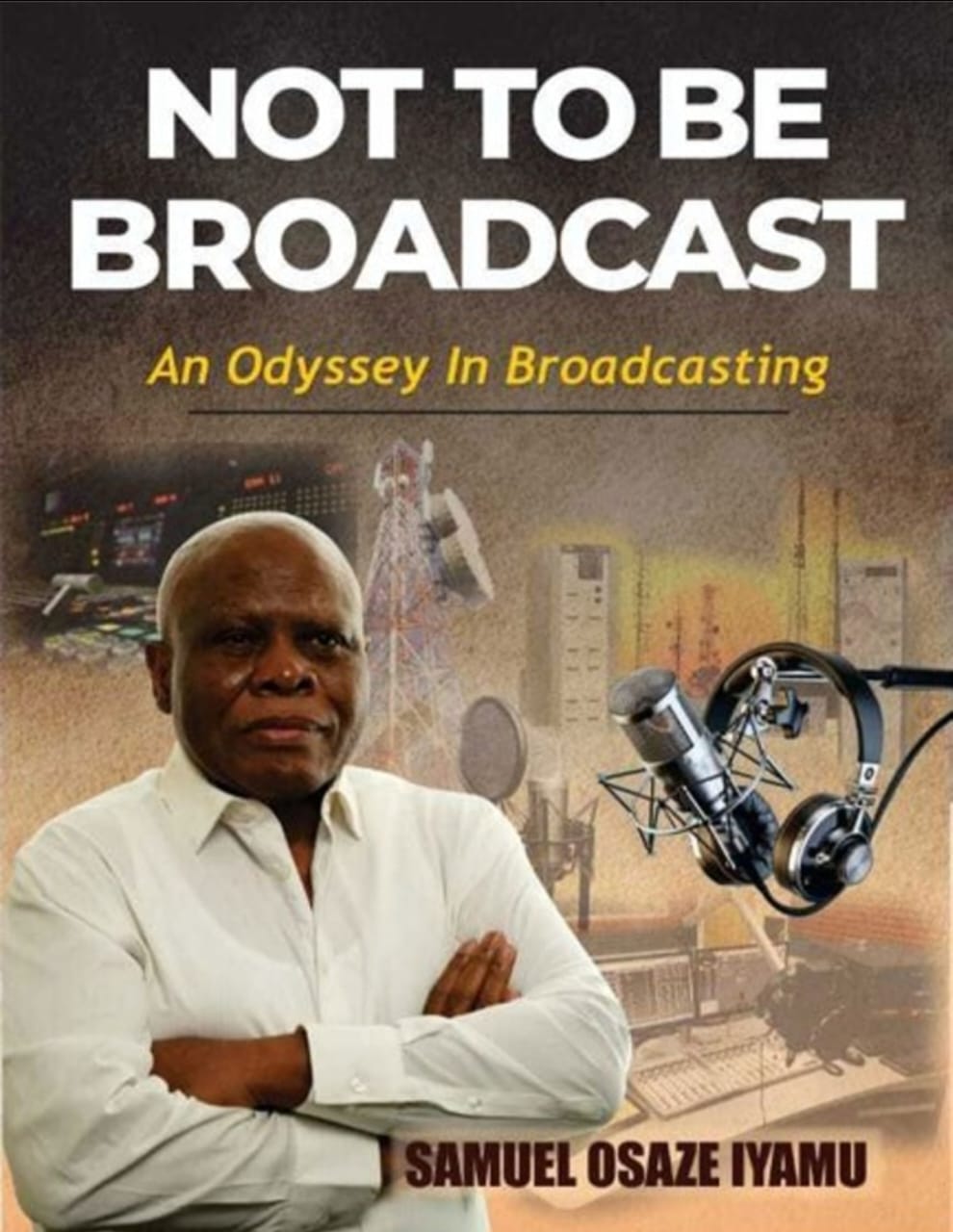
A celebrated Canadian-Nigerian broadcaster, Samuel Osaze Iyamu, has released a landmark memoir chronicling decades of journalism at the intersection of power, conflict, and culture across Africa.
Titled Not to Be Broadcast, the book—published in recently and now available globally—offers a sweeping account of Iyamu’s more than 35-year career in national and international broadcasting, alongside a deeply personal reflection on the forces that shaped modern African media.
From his early education at Edo College in Benin City to an unexpected entry into broadcasting after abandoned studies in the United Kingdom, Iyamu’s journey spans some of Nigeria’s most influential media institutions, including the Voice of Nigeria and the Federal Radio Corporation of Nigeria.
The memoir goes beyond a personal narrative, offering what observers describe as a rare insider account of broadcasting in Nigeria and West Africa during periods of political upheaval and military rule. One of its central themes is the role of media power in shaping legitimacy, captured in Iyamu’s assertion that control of the airwaves often outweighs constitutional authority.
The book opens dramatically with a near-fatal shooting incident in Lagos in 2001, when Iyamu was caught in an altercation with soldiers during a fuel scarcity crisis—an episode he uses to illustrate the risks of challenging authority in a militarised environment. From there, the narrative moves through his family background and professional ascent, highlighting defining moments in a career devoted to public-interest journalism.
As Chief News Producer at the Voice of Nigeria, Iyamu recounts coordinating coverage of the Liberian Civil War and the Sierra Leone Civil War, including interviews with ECOMOG commanders and political figures conducted under difficult conditions. He also revisits the tense newsroom atmosphere following the sudden death of Nigeria’s former military ruler, Sani Abacha, in 1998—a moment handled under intense national and international scrutiny.
Beyond politics and conflict, Not to Be Broadcast explores Africa’s cultural memory. Iyamu dedicates significant attention to his acclaimed radio documentary series Highlife My Life, a years-long effort to preserve West Africa’s musical heritage. A key highlight is his search for legendary musician Ambrose Campbell, culminating in a filmed interview in England widely regarded as an important archival contribution.
The latter part of the memoir addresses themes of institutional betrayal, professional exile, and migration to Canada, as well as the quieter aftermath of a life spent in the public eye. Despite these challenges, Iyamu closes on a note of resolve, arguing that stories once deemed unfit for broadcast must still be preserved and told.
With the release, Iyamu is inviting engagement from journalists, academics, cultural historians, and readers across the African diaspora, positioning the memoir as both a historical document and a catalyst for renewed conversations about Africa’s media heritage.
Not to Be Broadcast is currently available through major bookstores worldwide.