
Dare Babalola
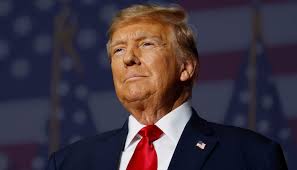
United States President Donald Trump has openly criticised Pope Leo XIV, declaring he is “not a big fan” of the Catholic leader following the pope’s recent anti-war remarks.
Speaking to reporters late Sunday at Joint Base Andrews in Maryland, Trump described the pontiff as “very liberal,” accusing him of being “weak on crime” and “terrible for foreign policy.”
He further alleged that the pope was “toying with a country that wants a nuclear weapon,” in apparent reference to tensions involving Iran.
“I’m not a big fan of Pope Leo. He’s a very liberal person, and he’s a man that doesn’t believe in stopping crime,” Trump said.
The remarks came after Pope Leo XIV, a 70-year-old American cleric, delivered a strong appeal for peace on Saturday while addressing worshippers at St. Peter’s Basilica.
In his message, the pope condemned global conflicts and urged world leaders to abandon violence, declaring: “Enough of the idolatry of self and money! Enough of the display of power! Enough of war!”
Trump doubled down on his criticism in a post on Truth Social, stating that he did not want “a Pope who thinks it’s OK for Iran to have a Nuclear Weapon.”
The exchange follows a series of escalating tensions between Washington and Tehran. Earlier in the week, Trump sparked outrage after issuing a stark warning that suggested catastrophic consequences for Iran, prompting Pope Leo to condemn the statement as “truly unacceptable” and call for renewed diplomatic engagement.
Subsequently, Trump announced that Iran had shown willingness to negotiate, leading to talks in Islamabad, Pakistan, and a temporary ceasefire.
He maintained that the United States had largely achieved its military objectives and was nearing a “definitive agreement concerning long-term peace.”
The pope welcomed the ceasefire, describing it as a “sign of real hope.”
However, negotiations between the two countries later broke down after a prolonged 21-hour session in Islamabad.
US Vice President JD Vance told reporters that Washington had presented its “final and best offer,” which Iran ultimately rejected, particularly on demands related to its nuclear programme.
Following the collapse of talks, Trump ordered a naval blockade of the Strait of Hormuz, citing Iran’s refusal to halt its nuclear ambitions. In a statement on Sunday, he said most aspects of the negotiations had been agreed upon but noted that discussions had not produced a final resolution.
“Effective immediately, the United States Navy will begin the process of blockading any and all ships trying to enter or leave the Strait of Hormuz,” Trump said, warning that any hostile action from Iran would be met with force.