
Dare Babalola
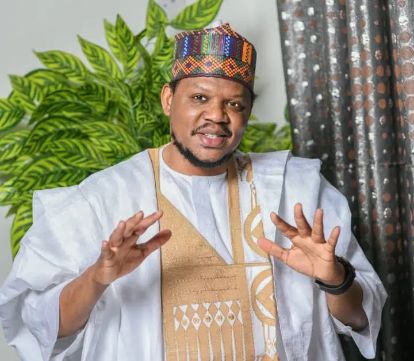
A former presidential aspirant under the platform of the All Progressives Congress (APC), Adamu Garba II, on Wednesday called for greater unity among Muslim-majority nations, arguing that their collective control of key global resources and strategic trade routes positions them to reshape the global balance of power without resorting to conflict.
In a social media post, Garba framed his argument around what he described as the untapped geopolitical leverage of the Muslim world, stressing that cooperation rather than division could significantly alter existing international power structures.
According to him, “if the Muslim world truly understood itself, its history, its blessings, and its strategic position in the modern world, the global balance of power would shift without a single shot fired.”
Garba pointed specifically to the global oil economy and the dominance of the petrodollar system, which underpins the influence of the United States.
He argued that the system is heavily dependent on energy resources largely situated in Muslim-majority regions.
“The bedrock of American global power is the petrodollar system yet the irony is striking: the entire foundation of this system rests on resources and trade routes overwhelmingly controlled by Muslim-majority nations,” he said.
Garba highlighted several critical geopolitical corridors, including the Strait of Hormuz, the Suez Canal, and the Strait of Malacca, noting that they are either controlled or bordered by Muslim-majority countries.
He also referenced regions such as the Middle East and North Africa, as well as countries like Saudi Arabia, Iran, Turkey, and Indonesia, as central to global energy supply chains and maritime trade.
Expanding on his argument, he described this geographic positioning as a “divine endowment,” lamenting that internal divisions, conflicts, and governance challenges have prevented Muslim nations from fully harnessing their collective strength.
“Instead of using these blessings to uplift themselves and humanity, many Muslim nations have fallen into division, conflict, and shortsightedness,” Garba stated.
He further argued that issues such as extremism, corruption, and lack of long-term strategic vision have undermined progress across parts of the Muslim world, but maintained that the underlying potential remains intact.
“The potential remains. It has not disappeared. It is simply dormant,” he added.
Garba proposed a model of unity based not on political consolidation but on shared purpose and coordinated strategy among nations, citing countries such as Pakistan, Bangladesh, Egypt, and Nigeria as part of a broader bloc that could wield significant global influence if aligned.
“If Muslims could unite — not as one country, not under one ruler, but under one purpose — the world would witness a transformation,” he said, adding that such alignment would enhance economic strength, diplomatic leverage, and cultural influence while reducing global tensions.
The politician concluded his remarks with a call for leadership within the Muslim world, posing what he described as a critical question for the future, “Who will rise with sincerity, wisdom, diplomacy, and responsibility to guide the Muslim world toward unity and purpose?”