
Dare Babalola
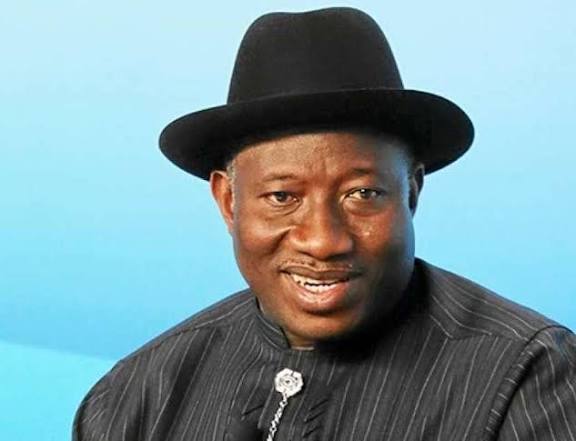
Former President Goodluck Jonathan has responded to recent remarks by Atiku Abubakar, defending his record in office and acknowledging that leadership inevitably comes with challenges and mistakes.
Atiku, a leading member of the African Democratic Congress (ADC), had criticised Jonathan’s tenure, describing him as inexperienced and suggesting that this affected his ability to effectively manage the country during difficult periods.
Reacting on Monday at the 2025 awards ceremony of the Association of Retired Career Ambassadors of Nigeria in Abuja, Jonathan dismissed the claim that his age or experience level defined his performance while in office.
“So not too long ago, a very senior politician said, ‘Oh, Jonathan was too young and probably that’s why he made mistakes,’” he said.
“If I made mistakes, yes, nobody who becomes a governor or a president will say you did not make mistakes. Even when you elevate yourself to the level of a god, you become a deity. All human beings must make mistakes.”
Jonathan further questioned the basis of the criticism, noting that he was already in his fifties when he assumed office.
“I became president in 2010 at the age of 53. I left in 2015 at the age of 58, and they say I was too young. Must it have been 100 years before I ran the affairs of the state?” he added.
Defending his administration’s foreign policy achievements, Jonathan pointed to Nigeria’s successful election into the United Nations Security Council, stressing that such accomplishments required strategic leadership.
“I’m talking to diplomats, so I can say that during my period, I knew what I did for us to appear in the UN Security Council two times. If I were so naive, I don’t think I would have been able to navigate through that process,” he stated.
Beyond the exchange, Jonathan expressed concern over the persistent political instability in West Africa, warning that it remains a major obstacle to economic growth in the region.
“We cannot progress economically if we are very unstable societies politically,” he said.
Referring to the vision of the Economic Community of West African States (ECOWAS), he noted that ongoing governance crises have slowed regional integration efforts.
“That means that ECOWAS must interfere with the internal affairs of the states, and the issue of sovereignty becomes a problem,” Jonathan explained.
He called on leaders across the sub-region to work collectively towards stability, emphasising its importance for sustainable development.
“The heads of states of ECOWAS must continue to work together and agree on concrete terms and make sure that the sub-region is politically stable,” he said.
Jonathan also urged Nigerian diplomats to properly document foreign policy experiences to serve as a guide for future administrations.