

Dare Babalola
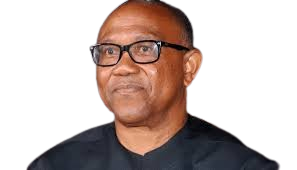
The presidential candidate of the Nigerian Democratic Congress (NDC), Peter Obi, has vowed to tackle insecurity, hunger, unemployment, poor healthcare and governance challenges if elected president in 2027.
Obi made the pledge in his acceptance speech following his emergence as the NDC presidential candidate, which he posted on his X account on Sunday.
In the address, Obi expressed gratitude to party leaders, supporters and Nigerians for entrusting him with the party’s presidential ticket, describing the nomination as a call to service rather than a personal achievement.
According to him, the mission ahead is to restore hope to millions of Nigerians battling economic hardship, insecurity and declining confidence in government.
“I wish to assert unequivocally: a New Nigeria is Possible. This conviction has united us; it must serve as our compass on the challenging road ahead and sustain us through all trials we may face,” he said.
The former governor said Nigeria was at a critical crossroads, with citizens increasingly worried about security, economic survival and the future of their children.
Addressing national unity, Obi stressed that Nigeria could not progress while divided along ethnic, religious and regional lines. He urged Nigerians to embrace diversity as a source of strength and work collectively towards national development.
On security, Obi lamented what he described as the worsening security situation in the country, noting that Nigeria’s ranking in global terrorism impact assessments had deteriorated over the years.
He recalled Nigeria’s reputation as a leading contributor to international peacekeeping operations, citing the country’s involvement in missions across Rwanda, Sudan, Liberia, Sierra Leone, Mali, Western Sahara, Congo, Lebanon, Cambodia, Haiti and Kuwait.
Obi promised to deploy intelligence-driven, technology-enhanced and community-focused security measures to tackle criminality and terrorism.
“Our strategy will be intelligence-driven, technology-enhanced, proactive and community-focused. We will strengthen our security institutions, improve operational coordination, support our personnel and address the root causes of insecurity, namely poverty, unemployment and marginalisation,” he stated.
On healthcare, Obi described Nigeria’s health sector as being in a poor state, noting that only a fraction of the country’s primary healthcare centres were functioning effectively.
He pledged to more than double health insurance coverage within four years and increase healthcare spending to at least 10 per cent of Gross Domestic Product (GDP).
The NDC candidate also promised that every ward in the country would have a functional primary healthcare centre by the end of his first term.
Speaking on education, Obi said investment in schools, teachers, technology and vocational training would be prioritised to equip young Nigerians with skills needed for employment and entrepreneurship.
He also identified food insecurity as one of the country’s biggest challenges, citing global hunger rankings and estimates showing that millions of Nigerians could face acute hunger this year.
According to him, Nigeria possesses enough arable land to become a major agricultural producer and has no justification for being among the world’s hungriest nations.
He vowed to transform the country from a consumption-driven economy into a production-oriented one through massive investments in agriculture.
On electricity, Obi described Nigeria’s power generation capacity as grossly inadequate for its population and economic needs.
He pledged to increase electricity generation and distribution by at least 10,000 megawatts within four years to support businesses and industrial growth.
The former governor also promised aggressive support for micro, small and medium enterprises through tax incentives, affordable financing and targeted investments aimed at reducing unemployment and underemployment, particularly among young people.
Obi further pledged to reduce corruption and the cost of governance through transparency and accountability while ensuring strict adherence to the rule of law.
He also promised to strengthen democratic institutions, guarantee respect for opposition parties and promote transparent governance.
In a major political announcement, Obi said he would nominate former Kano State Governor, Rabiu Musa Kwankwaso, as his vice-presidential candidate.
“Following this, I will make democracy work and the vice president will be a partner, not a spare tyre. I hereby accept my affirmation and nominate Senator Rabiu Kwankwaso as my Vice President,” Obi declared.
He concluded by urging Nigerians to unite behind the vision of a better country, insisting that despite current challenges, a new Nigeria remains achievable.