
Dare Babalola
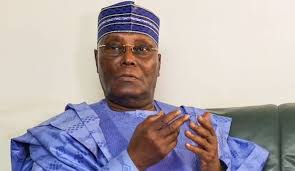
Former Vice President and 2023 presidential candidate of the Peoples Democratic Party, Atiku Abubakar, has issued a strongly worded Workers’ Day message accusing the administration of President Bola Tinubu of worsening the living conditions of Nigerian workers under its “Renewed Hope” agenda.
In a statement marking the 2026 commemoration of Workers’ Day on Friday, Atiku said the occasion, which globally celebrates the dignity of labour, had instead become a period of “grief” for Nigerian workers who, according to him, are battling escalating hardship, inflation, and declining purchasing power.
He said: “As we mark this year’s commemoration, I write not with celebration in my heart, but with grief. Grief for the Nigerian worker who was promised renewed hope and received instead renewed hardship.”
Atiku described the administration’s “Renewed Hope” slogan as a betrayal of public trust, alleging that it has failed to translate into improved welfare for citizens.
He argued that nearly three years into the Tinubu administration, what has been “renewed is hardship, not hope,” adding that the Nigerian workforce—teachers, nurses, civil servants, artisans, and factory workers—has borne the brunt of poor policy implementation.
“The Nigerian worker has been the primary victim of an administration that appears more interested in increasing government revenue than improving the lives of citizens,” he stated.
Reacting to the removal of fuel subsidy, Atiku maintained that while he had long supported subsidy removal in principle, the execution by President Tinubu was “irresponsible and callous.”
He said the policy was implemented without adequate preparation or social safeguards, leading to a sharp rise in transport fares, food prices, and general cost of living.
“The price of fuel skyrocketed. Transportation costs doubled and tripled overnight. The cost of food and basic goods hit the roof,” he said, adding that Nigerian workers were left to “drown without a safety net.”
Atiku argued that a more responsible approach would have involved phased implementation, social protection measures, and targeted support for vulnerable groups.
The former Vice President also questioned the handling of funds saved from subsidy removal, alleging that the resources have not translated into meaningful relief for Nigerians.
“Trillions were ostensibly saved, but nothing gained by the people,” he said.
He further criticised the allocation of resources, alleging that a significant portion of the funds was being directed toward the $11 billion Lagos–Calabar Coastal Highway project, which he said had raised concerns over due process and transparency.
Atiku alleged that the project was awarded without competitive bidding and questioned its connection to private interests, stating that governance should not be reduced to “the conversion of public resources for private enrichment.”
Atiku urged the government to re-evaluate its economic policies and prioritise the welfare of Nigerian workers, insisting that reforms must be accompanied by transparency, fairness, and social protection mechanisms.
He concluded that the true measure of governance should be the wellbeing of ordinary citizens, warning that continued hardship could deepen public distrust in government policies.